Introducing the Lovebirds Bonus Round 🦄
For the first couple of months, enclose.horse was a pretty straightforward affair. You got a grid, a horse, a handful of walls, and one goal: build the biggest enclosure you could. Every day, same format, same challenge. And honestly, that worked. People showed up, placed their walls, argued about strategy on social media, and came back the next day to do it again.
But we had been thinking about what comes next. We wanted to give experienced players a reason to stick around after submitting their main puzzle score. Something that asked a different kind of question than "how big can you build it?"
That something turned out to be a unicorn.
A new face on the field
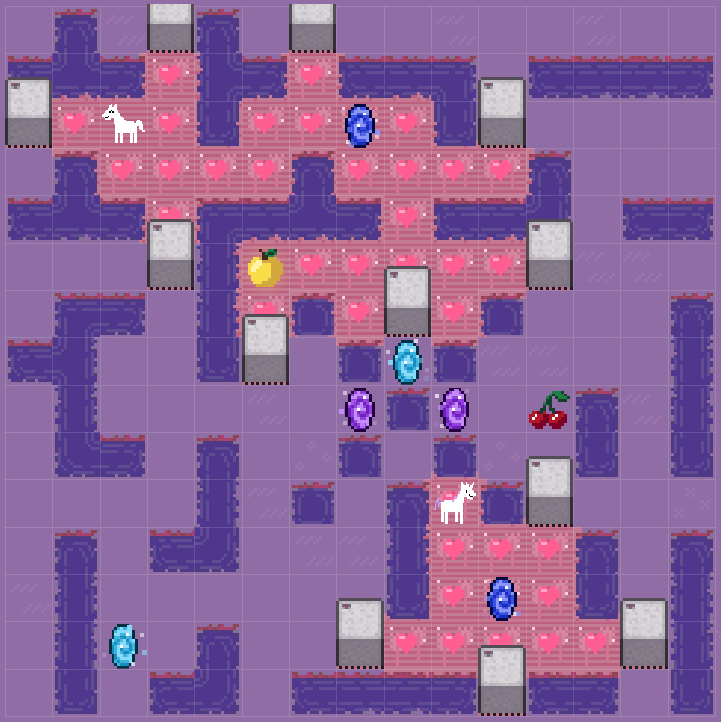
The Lovebirds bonus round was the first bonus mode we introduced in enclose.horse. After you finish the main daily puzzle and submit your score, a second grid appears. Same general layout, same tile types, but now there is a unicorn standing on the field alongside the horse. And the rules are different.
Your job is not just to enclose the horse anymore. You need to enclose both the horse and the unicorn, and they need to be inside the same enclosure. Not in separate enclosures. Not walled off from each other. Together. In one connected space, surrounded by your walls.
The idea sounds simple enough on paper. In practice, it changes the entire way you think about wall placement.
Why together matters
In the base game, your strategy revolves around one point on the grid: where the horse is standing. You read the terrain, identify natural chokepoints, and figure out where walls will be most efficient. The horse is the anchor of every decision you make.
Lovebirds flips that on its head. Now you have two anchors. The horse might be in one corner of the map and the unicorn in another, with a lake and three portals between them. You cannot just build a tight little box around one of them and call it a day. Your enclosure has to reach both, which often means building something larger and more creative than you would for a standard puzzle.
And here is the thing that trips people up: if you enclose them separately, horse in one enclosure and unicorn in another, it does not count. The game checks that both animals can reach each other within the enclosed area. They have to share the same connected space. That single constraint turns what looks like a normal puzzle into something that asks for a fundamentally different approach.
Cranking up the difficulty
We did not just slap a unicorn onto the existing daily puzzle and call it done. The Lovebirds bonus round is designed to be harder than the main game. The grids tend to have more portals, more obstacles, and trickier layouts. Bees make appearances more frequently. Water bodies are placed in ways that create awkward corridors between the two animals. The wall budget is often tight enough that you really have to plan before you start placing anything.
The portal density, in particular, is something that catches new Lovebirds players off guard. In a standard puzzle, portals add an interesting wrinkle to where the horse might wander. In Lovebirds, they can completely reshape the grid. A portal near the unicorn might connect to the opposite side of the map, which means the enclosure you are building needs to account for gaps you might not even see at first glance. Portals that looked manageable in the main puzzle suddenly become critical chokepoints when you are trying to keep two animals safe in the same enclosure.
Then there are the bees. A bee swarm is bad enough when you are building an enclosure for one horse. In Lovebirds, a well-placed skull tile can sit right in the natural path between the horse and unicorn, forcing you to either take the penalty or find a longer way around, which usually means spending more walls.
The theme changes too
When you enter a Lovebirds round, the whole grid shifts to a purple and pink colour palette. The ground tiles swap to hearts. The background darkens to a deep violet. It is a pretty clear visual signal that you are playing something different from the main puzzle. We designed the Lovebirds theme specifically for this mode because we wanted the shift to feel deliberate, almost like loading into a different world. The horse and unicorn stand out against the purple terrain in a way that makes the grid instantly readable, even on smaller screens.
What the horse thinks about all this
One thing we enjoy about enclose.horse is that the characters have a bit of personality. Click on the horse during a normal game and he will share his thoughts on enclosure life, make an offhand remark about horse rights, or comment on the view.
But in Lovebirds? When the horse and unicorn share an enclosure, he is over the moon. Suddenly he has got no further complaints. He takes back everything he said about the walls. The unicorn, meanwhile, is playing it cool, claiming she chose this enclosure specifically and telling you not to read into it. It is a small detail, but it is the kind of thing that makes the bonus round feel like more than just a harder version of the same puzzle.
Strategy differences
If you are wondering how to approach Lovebirds, here are a few things we have noticed from watching player data:
- Start by identifying the shortest path between the horse and unicorn. That corridor is the backbone of your enclosure.
- Look for natural barriers like water and map edges that can serve as free walls along that path.
- Account for portals early. A portal exit near one of the animals can blow open a gap in the enclosure you did not plan for.
- Do not ignore bonus tiles. Cherries and gems still count toward your score, and a wider enclosure that includes them can be worth more than a tight, efficient one.
- Check your enclosure is actually connected before submitting. The most common mistake in Lovebirds is building two separate enclosures by accident.
What it adds to the daily routine
The bonus round is optional. You do not have to play it, and your main puzzle score is unaffected either way. But for players who want more out of their daily enclose.horse session, Lovebirds gives them a second puzzle to wrestle with, and a second score to share. When you share your results, both your main score and your bonus score appear together, so people can compare across both rounds.
It also opens up a different kind of conversation in the community. People who normally agree on the best strategy for the main puzzle will sometimes disagree completely about the Lovebirds approach. That is a good sign. It means the bonus round is asking genuinely different questions.
If you have not tried Lovebirds yet, give it a shot after your next daily puzzle. And maybe click on the unicorn when you do. She has got some opinions.