Introducing the Costly Walls Bonus Round 🧱
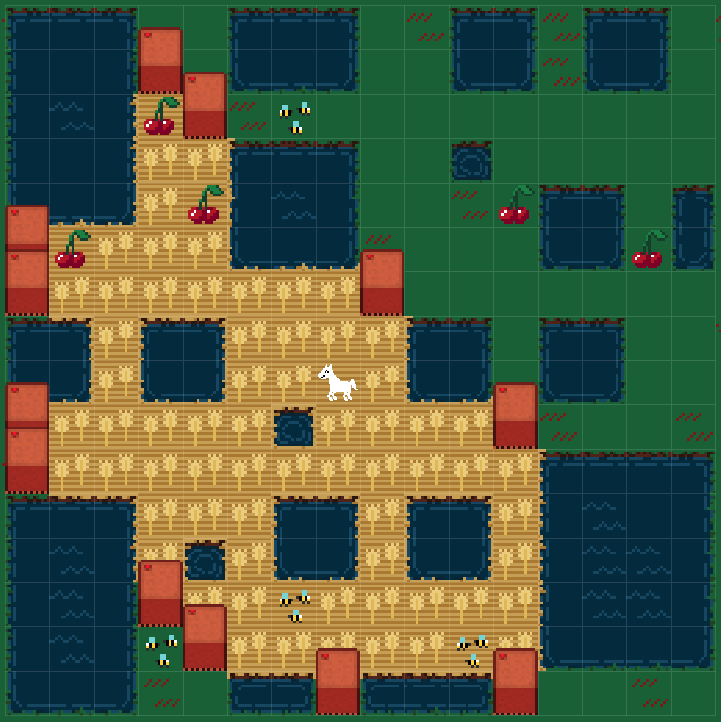
One of the most common suggestions we got from players when we started thinking about bonus rounds was some version of "make walls cost something." In the regular game, walls are free. You get a budget of, say, 12 walls and you use all 12. There is no reason not to. The only question is where to put them.
Costly Walls takes that assumption and throws it out the window. Every wall you place now costs you 6 points. Suddenly, using all of your walls is not obviously the right move anymore. In fact, sometimes it is the worst thing you can do.
How it works
The rules are dead simple. You still get a wall budget, same as the normal puzzle. You still need to enclose the horse. But every wall you place deducts 6 points from your total score. So if you build a big enclosure worth 40 points but you used 10 walls, that is 60 points of wall costs. Your actual score would be negative 20.
Yeah. Negative scores are a thing in Costly Walls. It happens more often than you would think.
The optimal score on many Costly Walls rounds is genuinely low. Single digits. Sometimes the best possible answer uses just two or three walls. When you first see that on the scoreboard it feels wrong, like something must be broken. But it is not. The math just works differently when walls have a price.
You do not have to use all your walls
This is the thing that takes most players a round or two to really internalize. In the normal game, you always use your entire budget. If you have 12 walls available, you place 12 walls. Leaving walls on the table would be leaving points on the table.
In Costly Walls, the opposite is true. Leaving walls unplaced is often the correct play. If the puzzle gives you 12 walls, the optimal answer might only use 8. Or 5. We have had rounds where the best score comes from placing just 2 walls in exactly the right spots, letting the water and map edges do the rest of the work.
It is a weird feeling the first time you realize you should stop building. In the regular game your brain is trained to think "more walls = bigger enclosure = better score." Costly Walls breaks that habit pretty quickly.
Where the idea came from
We had been collecting feature requests and bonus round ideas from the community for a while, and "walls should cost points" kept coming up. People wanted a mode where you could not just build out in every direction. They wanted something that forced you to think about whether each individual wall was worth placing. Not "can I fit one more wall in?" but "should I?"
It was one of those ideas that sounded great on paper and then turned out to be even better in practice. The moment we started testing it internally, the strategy conversations completely changed. Instead of "where do I build the biggest enclosure," it became "what is the smallest number of walls I can get away with." That is a totally different puzzle.
The race to the bottom
One thing we did not fully anticipate is the community that has sprung up around getting the lowest possible score. Some players open a second browser specifically to try to find the worst result they can manage. How low can you go? If there are bees on the grid, you can intentionally enclose them with the horse. Throw in the wall costs and suddenly you are trying to engineer a score of negative 30 or worse.
It sounds silly, but finding the absolute lowest score is actually a legitimate puzzle in its own right. You have to think about which skull tiles to include, how many walls to waste, and how to avoid accidentally picking up cherries or gems that would raise your score. Trying to be as bad as possible turns out to be harder than you would expect.
How it changes your thinking
In the standard game, the strategy is pretty consistent: find chokepoints, use terrain to your advantage, build the largest enclosure you can manage. Costly Walls flips your priorities. You are now looking for places where the terrain basically does the work for you. A horse sitting in a corner near some water? That might only need two or three walls to close off. A horse in the middle of an open field? Good luck. Every wall you place to reach it costs points, and the enclosure needs to be worth enough tiles to justify the expense.
Cherries and gems become way more important too. In the normal game, bonus tiles are nice to have. In Costly Walls, they can be the difference between a positive and negative score. A cherry inside a small, cheap enclosure might be the whole reason that enclosure is worth building at all.
The horse has opinions about the costs
Of course, the horse has something to say about all of this. Click on him during a Costly Walls round and he will remind you that fences are not cheap. "Inflation, am I right?" he says. He has also started making wry comments about how much you are spending on his enclosure. "This enclosure cost more than my stable" is a personal favourite.
He is also got a point: have you considered just... a bigger enclosure? Free-range horse. As nature intended. Unfortunately for him, that is not how you earn points.
Tips for new Costly Walls players
- Do not use all your walls just because you can. Every wall costs 6 points, so leave them unplaced unless they earn you more than they cost.
- Look at where the horse is relative to the edges of the map and any water. Natural barriers are free.
- Target bonus tiles. A small enclosure with a cherry or gem inside is often worth more than a bigger one without.
- Do not try to build the biggest enclosure. Build the most efficient one.
- If you see the optimal score and it looks absurdly low, trust it. The math is different here.
Costly Walls is available as the bonus round after certain daily puzzles. If you have not run into it yet, keep playing. And when you do, resist the urge to place every wall you have got. Your score will thank you.